

DPP-IV Inhibitors Market to Reach US$18.8 Bn by 2033 at 6.0% CAGR | Persistence Market Research
DPP-IV inhibitors market
The DPP-IV inhibitors market is growing steadily, driven by rising diabetes prevalence, favorable safety profiles, and expanding access to oral therapies.
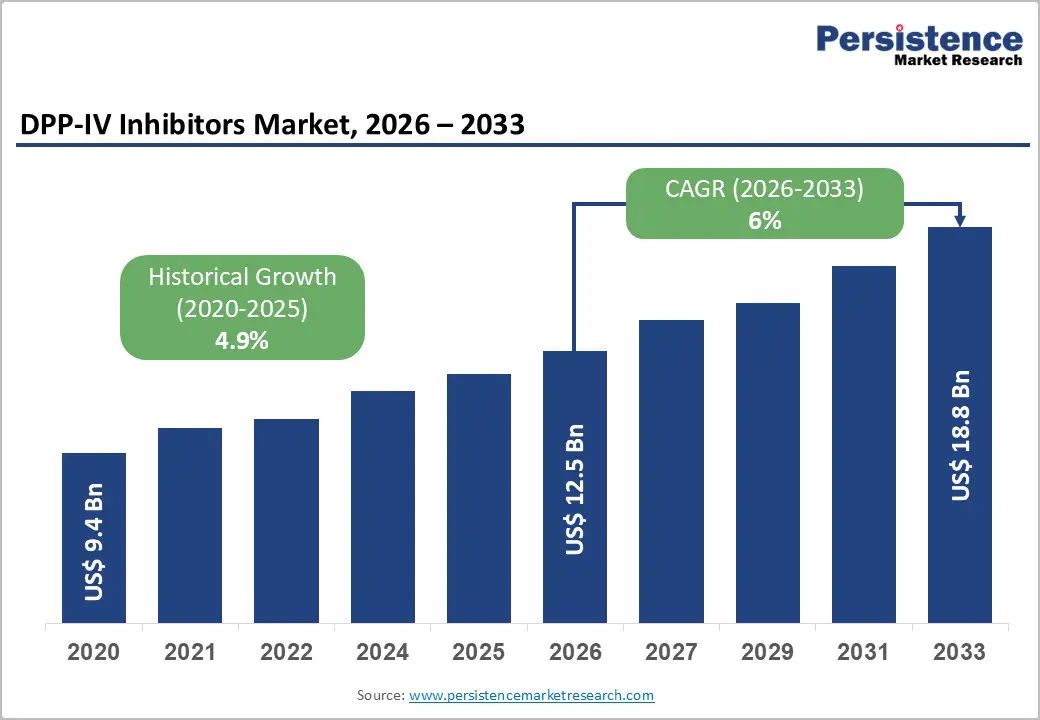
LONDON, UNITED KINGDOM, March 12, 2026 /EINPresswire.com/ -- The global DPP-IV inhibitors market is poised for robust growth, with a projected valuation of US$ 15.2 billion in 2026, expected to reach US$ 18.8 billion by 2033 at a CAGR of 6.0% during 2026–2033. Clinicians increasingly prefer oral antidiabetic drugs for first- and second-line therapy in routine glycemic management, contributing to steady market expansion. Dipeptidyl peptidase 4 (DPP-IV) inhibitors enjoy widespread clinical acceptance due to their glucose-dependent mechanism of action, weight-neutral profile, and low hypoglycemia risk. These characteristics make them essential components of combination therapy strategies, particularly in long-term disease management. Expanding generic availability and broader reimbursement coverage further stabilize the market, enhancing affordability and patient access in both developed and emerging economies.
Download Your Free Sample & Explore Key Insights: https://www.persistencemarketresearch.com/samples/5453
Key Industry Highlights
Dominant drug types include sitagliptin, which is projected to hold approximately 39% of revenue in 2026. Teneligliptin is anticipated to be the fastest-growing molecule through 2033 due to strong adoption in cost-sensitive Asian markets. Branded DPP-IV inhibitors are expected to account for around 47% of market value in 2026, while generic drugs are projected to grow at a CAGR of 7.5% through 2033. Retail pharmacies are projected to hold 50% of revenue in 2026, while online pharmacies are expected to expand rapidly, driven by e-prescriptions and chronic care delivery. North America is set to lead with a 37% share in 2026, while Asia Pacific is anticipated to grow fastest at an 8% CAGR during 2026–2033.
Market Factors – Growth, Barriers, and Opportunities
Rising prevalence of type 2 diabetes is a major driver, with over 530 million adults affected globally in 2023, as per the International Diabetes Federation. Aging populations, lifestyle changes, and rising obesity rates contribute to the expanding patient base. As diagnosis and screening improve, more patients are entering long-term treatment pathways, increasing demand for oral antidiabetic therapies. Policy developments, such as the inclusion of linagliptin and sitagliptin–metformin combinations in Medicare Part D price negotiations, further strengthen market access and affordability.
Generic Availability and Clinical Positioning
DPP-IV inhibitors are clinically favored for low hypoglycemia risk and a strong safety profile, supporting physician confidence and patient adherence, especially among the elderly and patients with comorbidities. Generic drug penetration improves affordability and accessibility globally, reinforced by government reimbursement initiatives. In China, the National Healthcare Security Administration expanded coverage for additional generic formulations, accelerating adoption across hospitals and retail pharmacies.
Get Custom Insights Designed for Your Business: https://www.persistencemarketresearch.com/request-customization/5453
Competitive Pressures from Newer Drug Classes
Emerging antidiabetic classes, such as GLP-1 receptor agonists and SGLT-2 inhibitors, offer superior cardiovascular and renal outcomes, gradually reducing the addressable patient population for DPP-IV inhibitors, particularly in mature markets. Policy focus on these newer therapies, including Medicare Part D pricing negotiations, reinforces the competitive challenge, limiting long-term revenue expansion despite stable disease prevalence.
Pricing Pressure and Margin Erosion
Generic competition drives price reductions, particularly in Asia Pacific and Latin America, compressing margins for manufacturers. Regulatory measures, such as the EU Health Technology Assessment Regulation and centralized procurement in Latin America, restrict pricing flexibility, influencing strategic decisions within the DPP-IV inhibitors market.
Opportunities in Emerging Markets
Emerging economies offer significant growth potential due to low diagnosis-to-treatment ratios. Early detection programs, such as AI-based screening initiatives in India and expanded community screening in the U.K., increase patient access and support long-term demand for oral therapies. Policy emphasis on integrated diabetes care further sustains uptake, aligning with global initiatives like the WHO Global Diabetes Compact.
Category-wise Analysis
Sitagliptin remains dominant with 39% market revenue in 2026 due to early market entry, broad regulatory approvals, and clinical familiarity. Teneligliptin is the fastest-growing drug type in Asia Pacific, projected to grow at 8.2% CAGR from 2026 to 2033, driven by cost-effectiveness and generic adoption. Branded medications capture 47% of market value, particularly in North America and Europe, while generic drugs exhibit a 7.5% CAGR due to patent expirations and government support.
Regional Insights
North America maintains leadership with 37% market share in 2026, supported by high diabetes prevalence, broad insurance coverage, and established prescribing practices. Europe remains stable, with demand underpinned by structured care pathways and harmonized regulatory oversight. Asia Pacific is the fastest-growing region at 8% CAGR, driven by rising diabetes prevalence, improved access to affordable therapies, and policy support for generics.
Competitive Landscape
The market is moderately consolidated, with Merck & Co., AstraZeneca, Boehringer Ingelheim, Novartis, and Takeda Pharmaceutical leading globally. Regional and generic manufacturers in Asia Pacific and Latin America strengthen presence through cost-efficient production. Recent strategic developments include Novo Nordisk’s oral semaglutide launch and Eli Lilly’s collaboration with Repertoire Immune Medicines.
Checkout Now & Download Complete Market Report: https://www.persistencemarketresearch.com/checkout/5453
Market Segmentation
By Drug Type
Sitagliptin
Linagliptin
Teneligliptin
Saxagliptin
Others
By Medication Type
Branded Drugs
Generic Drugs
Fixed-Dose Combinations
Others
By Distribution Channel
Retail Pharmacies
Hospital Pharmacies
Online Pharmacies
Others
By Region
North America
Europe
East Asia
South Asia & Oceania
Latin America
Middle East & Africa
Conclusion
The DPP-IV inhibitors market is projected to expand steadily through 2033, fueled by rising diabetes prevalence, favorable clinical positioning, generic adoption, and regional growth opportunities. Competitive pressures and pricing challenges exist, but integrated care initiatives and policy support sustain long-term demand, positioning DPP-IV inhibitors as a core component of type 2 diabetes management worldwide.
Read Related Reports:
Heel Pressure Injury Relieving Devices Market: The heel pressure injury relieving devices market is expected to grow from US$1.5 Bn in 2026 to US$2.5 Bn by 2033, at a 5.3% CAGR driven by patient care demand.
NPWT Devices and Dressings Market: The NPWT devices and dressings market to grow from US$3.8 Bn in 2026 to US$6.4 Bn by 2033, registering a 7.9% CAGR driven by advanced wound care demand.
Persistence Market Research
Persistence Market Research Pvt Ltd
+1 646-878-6329
email us here
Visit us on social media:
LinkedIn
Instagram
Facebook
YouTube
X
Legal Disclaimer:
EIN Presswire provides this news content "as is" without warranty of any kind. We do not accept any responsibility or liability for the accuracy, content, images, videos, licenses, completeness, legality, or reliability of the information contained in this article. If you have any complaints or copyright issues related to this article, kindly contact the author above.
